


✨ Today’s free idea is sponsored by HubSpot ✨
Picture this: A buyer opens ChatGPT and asks for a recommendation in your category. Your competitor’s name comes up. Yours doesn’t. And that buyer never makes it to your website. That’s happening right now in markets everywhere. And most teams don’t know it’s happening because it never shows up in their analytics.
HubSpot AEO shows you *exactly* where your brand stands in AI search, where competitors are getting recommended instead of you, and tells you specifically what to fix.

No expertise needed. Try it free for 28 days. Just $50 a month after.
People are letting AI do their shopping.
Buyers ask it something like “Find me the cheapest tool for X”. The AI checks a few pricing pages and picks a winner. Sometimes it just recommends one. Sometimes it buys the thing itself.
But your pricing page is probably built for human eyes. When a robot reads it, it usually gets a pile of code with the price buried inside, or nothing at all.
So it may skip you. ❌
The fix is a simple duplication of your pricing page that robots can read. ✅
Here’s the marketing idea, plus the exact line (and the .md file) the world’s best companies already use:
1. Buffer
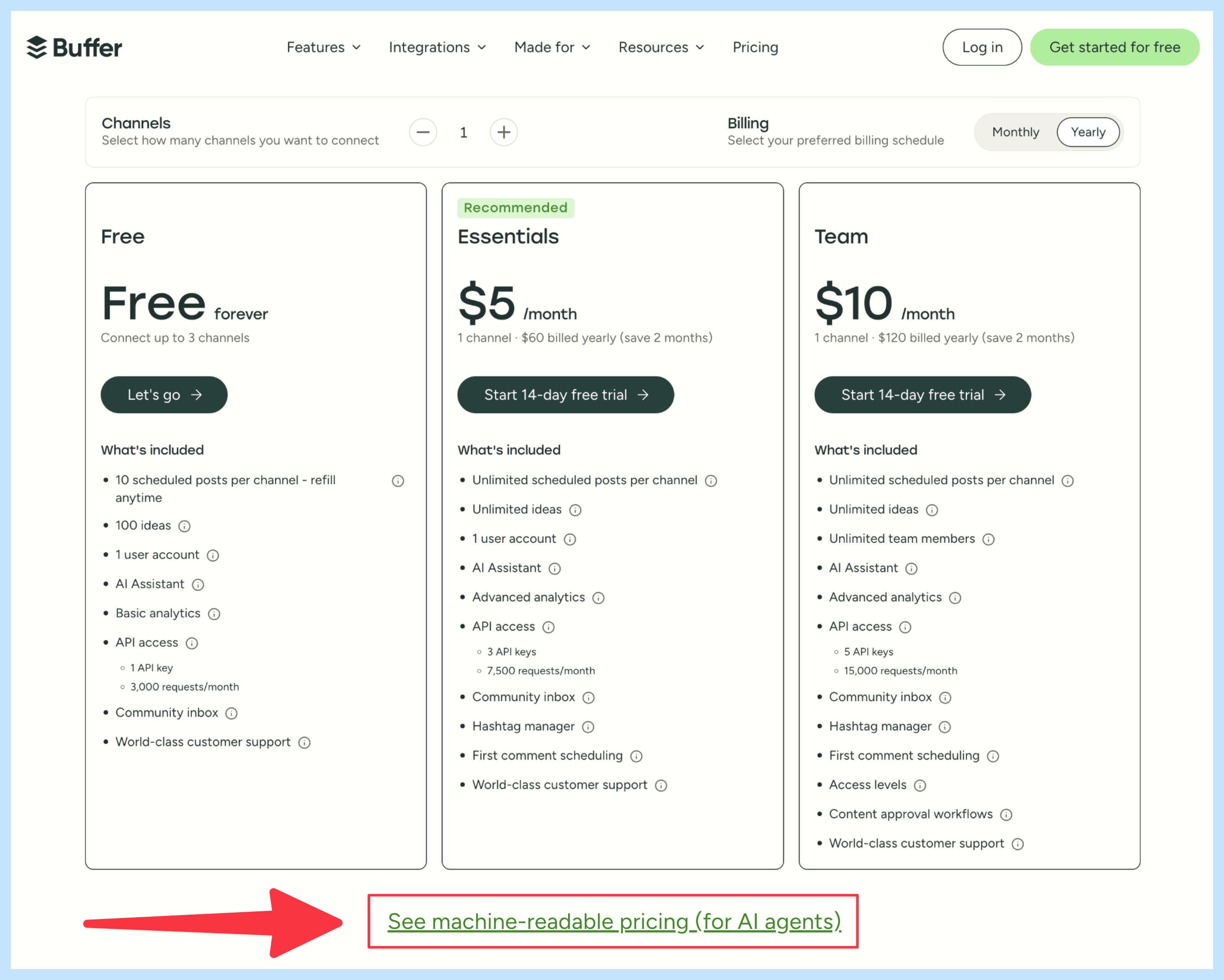
“See machine-readable pricing (for AI agents)” sits right under their normal plans.
When you click it, you get a plain text version of their pricing - .md format.
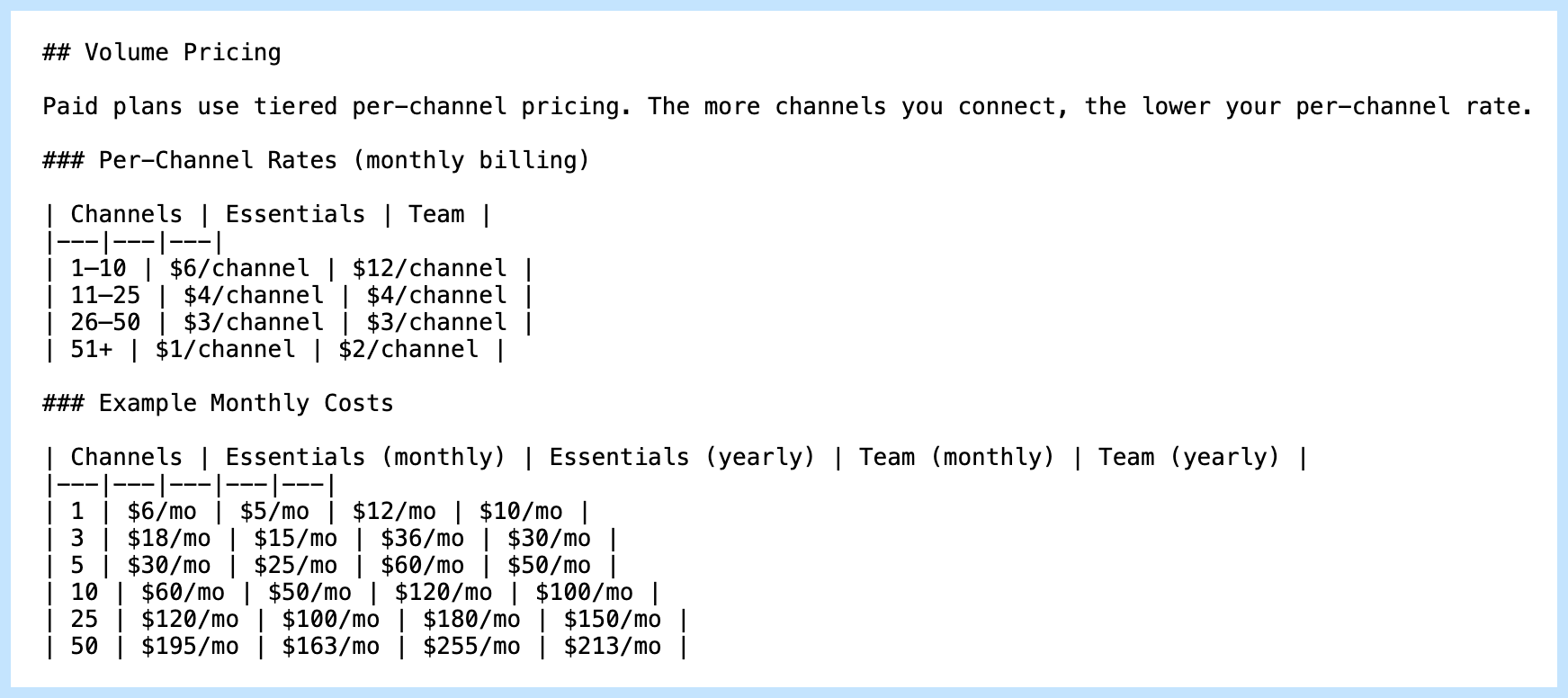
The .md file is much more elaborate than the website. It lays out their volume pricing as clean tables, so a robot can read the exact monthly cost at 1, 10, even 50 channels.
2. Flowdown
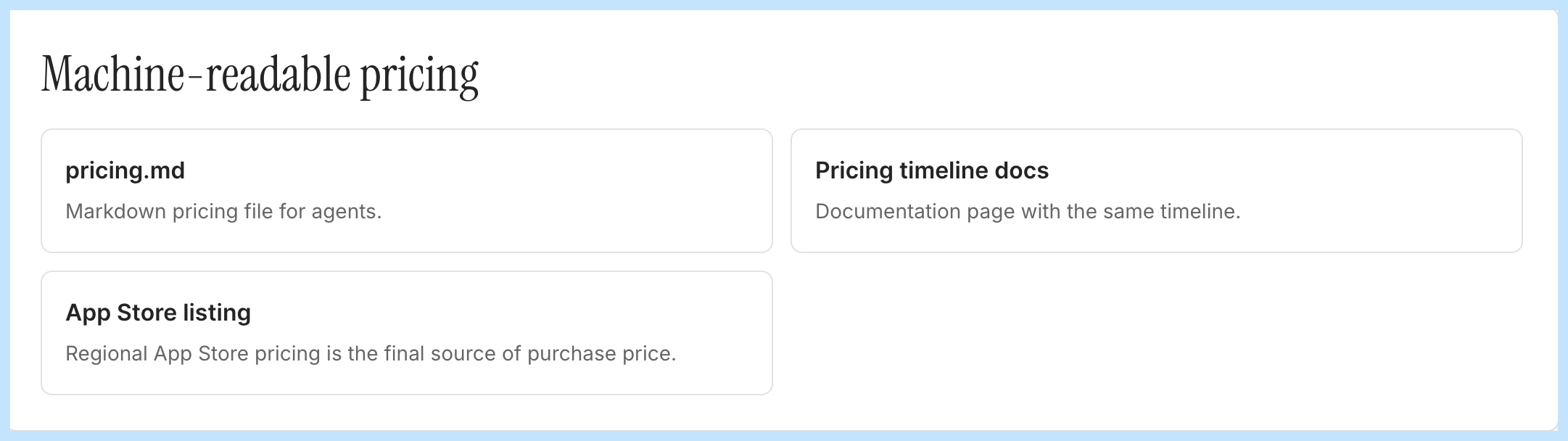
Flowdown has a complex GEO-based pricing system, so they did something smart: gave robots more than one file.
There’s the pricing.md, docs, plus a note telling the agent that the regional App Store price is the final word. For an app with prices that change by country → that saves the robot from quoting the wrong number.
3. Resend
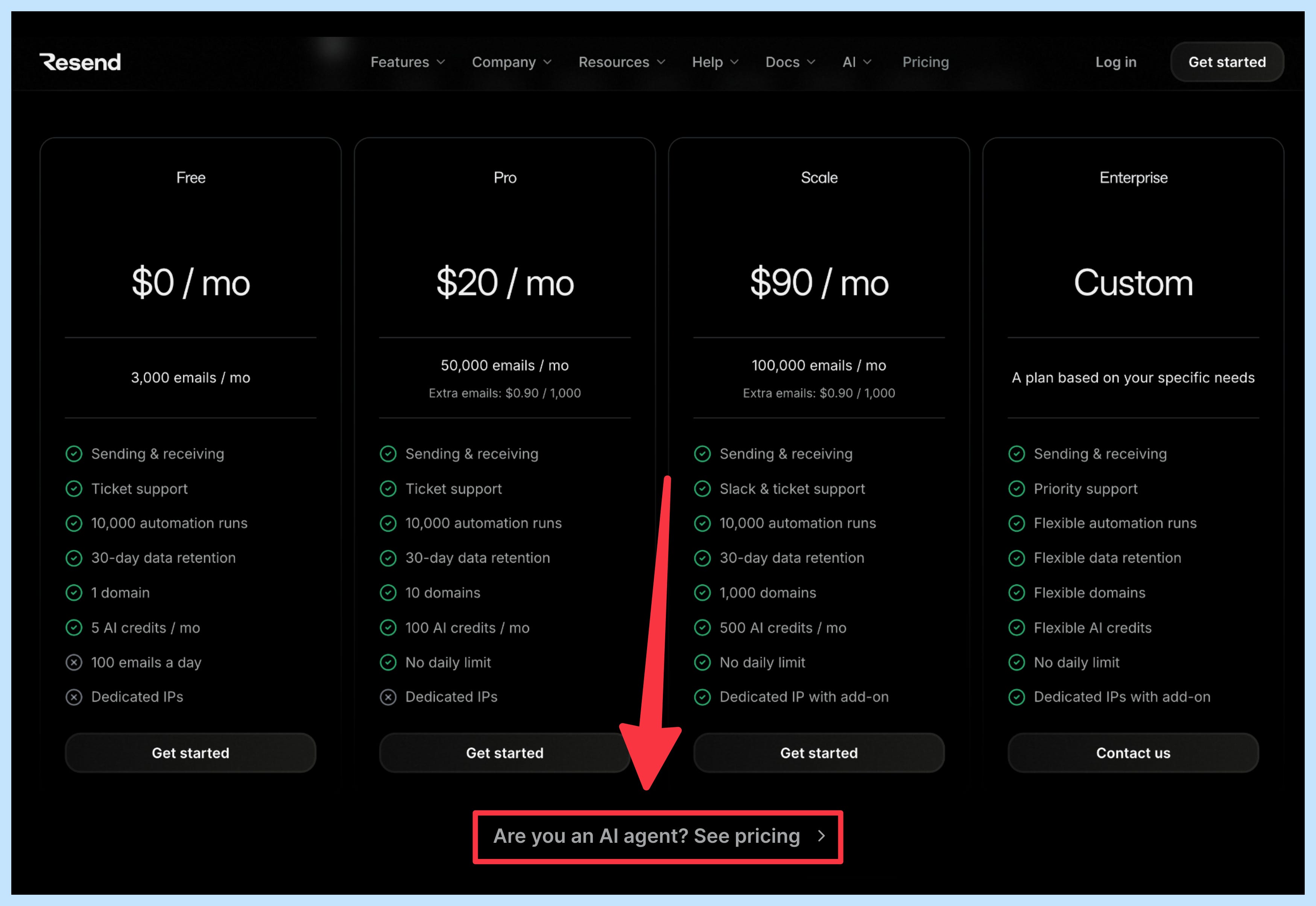
I loved the “Are you an AI agent?” framing here. Very cute for the humans reading it.
(h/t Kyle Poyar for this one.)
4. Stacktree
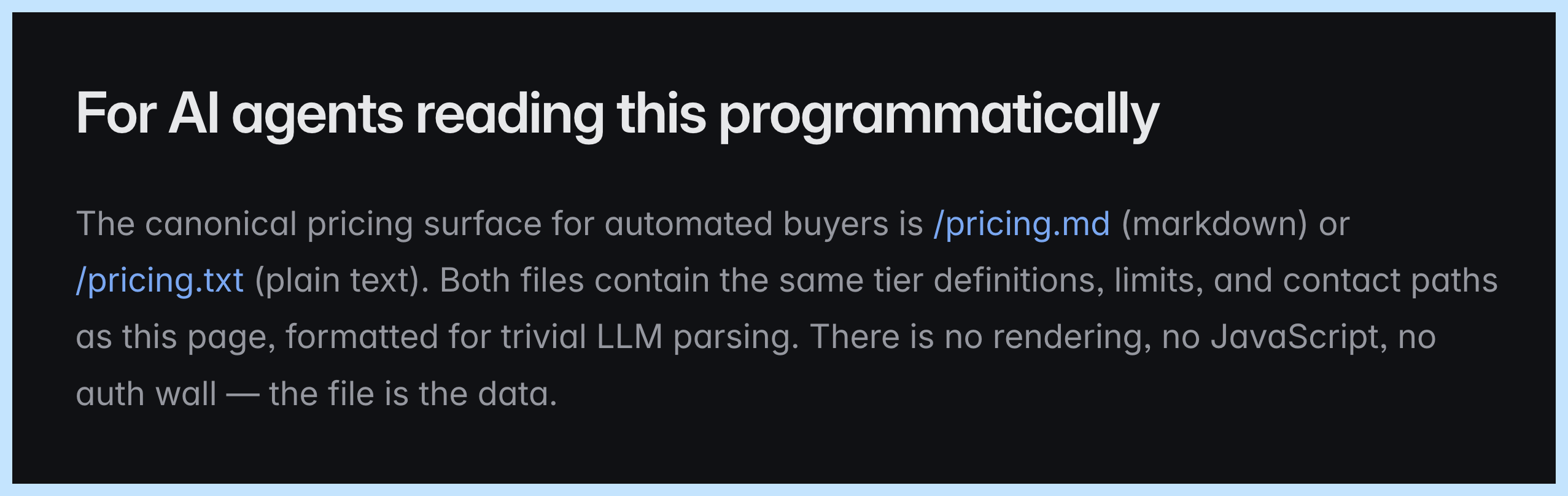
Stacktree has a whole section for AI agents in their pricing page. It points to the plain file (or a /pricing.txt version), promises no design and no login wall, and signs off with “the file is the data”. It’s the most robot-native version I could find.
5. Promptfax

This is the most advanced one. Promptfax gives robots a live link they can ask questions. The agent can add the customer’s usage to the URL to get an exact price: /pricing.json?page_count=13 gives the cost for 13 pages. Very cool.
How to copy it
Make a markdown file. That’s just a text file with simple formatting (headings and a table). Keep it plain, but give it a clear structure so a robot can grab any number in one pass:
A table of your plans: name, price, and what’s included.
Limits and overage: what each plan caps at, and the cost when you go over.
Billing: monthly vs yearly, and the real difference.
A short FAQ: the few questions every buyer asks before paying.
The skeleton all the best companies use:
# [Product] pricing
## Plans
| Plan | Price | Includes | Limit |
|------|--------|----------|-------|
| Free | $0/mo | ... | ... |
| Pro | $X/mo | ... | ... |
| Team | $Y/mo | ... | ... |
## Overage
What it costs when you pass the limit.
## Billing
Monthly vs yearly.
## FAQ
The 3-4 questions buyers always ask.
Save it at yoursite.com/pricing.md (add a /pricing.txt copy too, some robots ask for plain text). Put one visible link on your real page, like Resend’s “Are you an AI agent? See pricing.” Update it when prices change.
That’s it ✅
You don’t even need to announce it
Plenty more companies do it with no link at all.
Supabase and WorkOS both have an md pricing file if you go looking, but they don’t redirect to it from the pricing page or publish it anywhere.
I guess more and more agents will automatically look for a /pricing.md file under your domain - so that’s a good place to start.
The robots are coming
IDC expects 70% of business buyers to use AI to find and choose tools by 2028, before a human ever lands on your page. So the robots are buying now. Give them something they can read.
See you next week ✌️

This is really interesting. Do you think the same idea could work for service-based businesses too? For example, agencies where pricing isn't fixed and depends on project scope, team size, or engagement model. Curious if you've seen any good implementations for that.
Thank you a lot for such an informative article🤝