


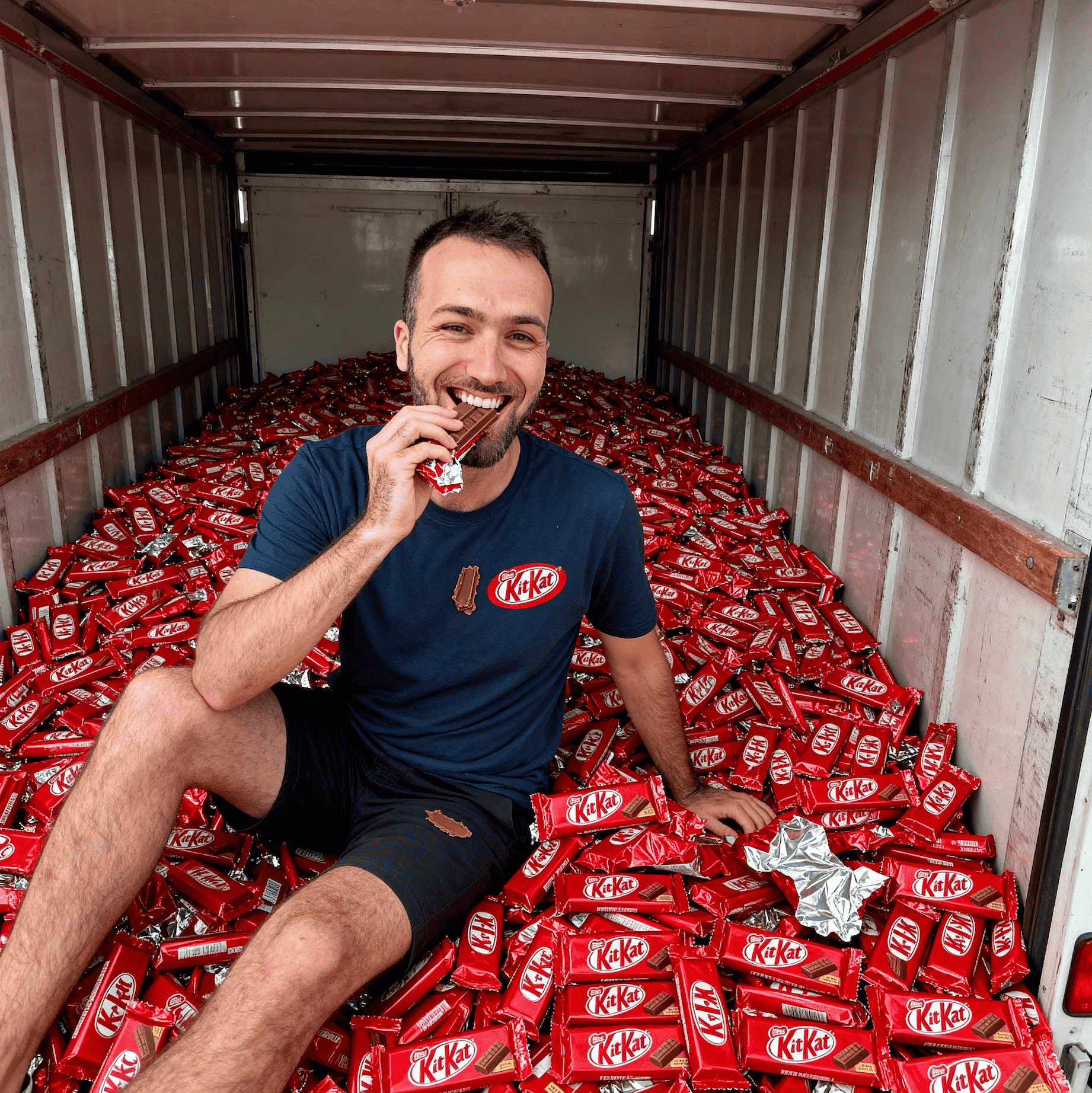
Last week, a truck carrying 413,793 KitKat bars disappeared somewhere between Italy and Poland. Twelve tons of chocolate - gone.
(I was home all week)
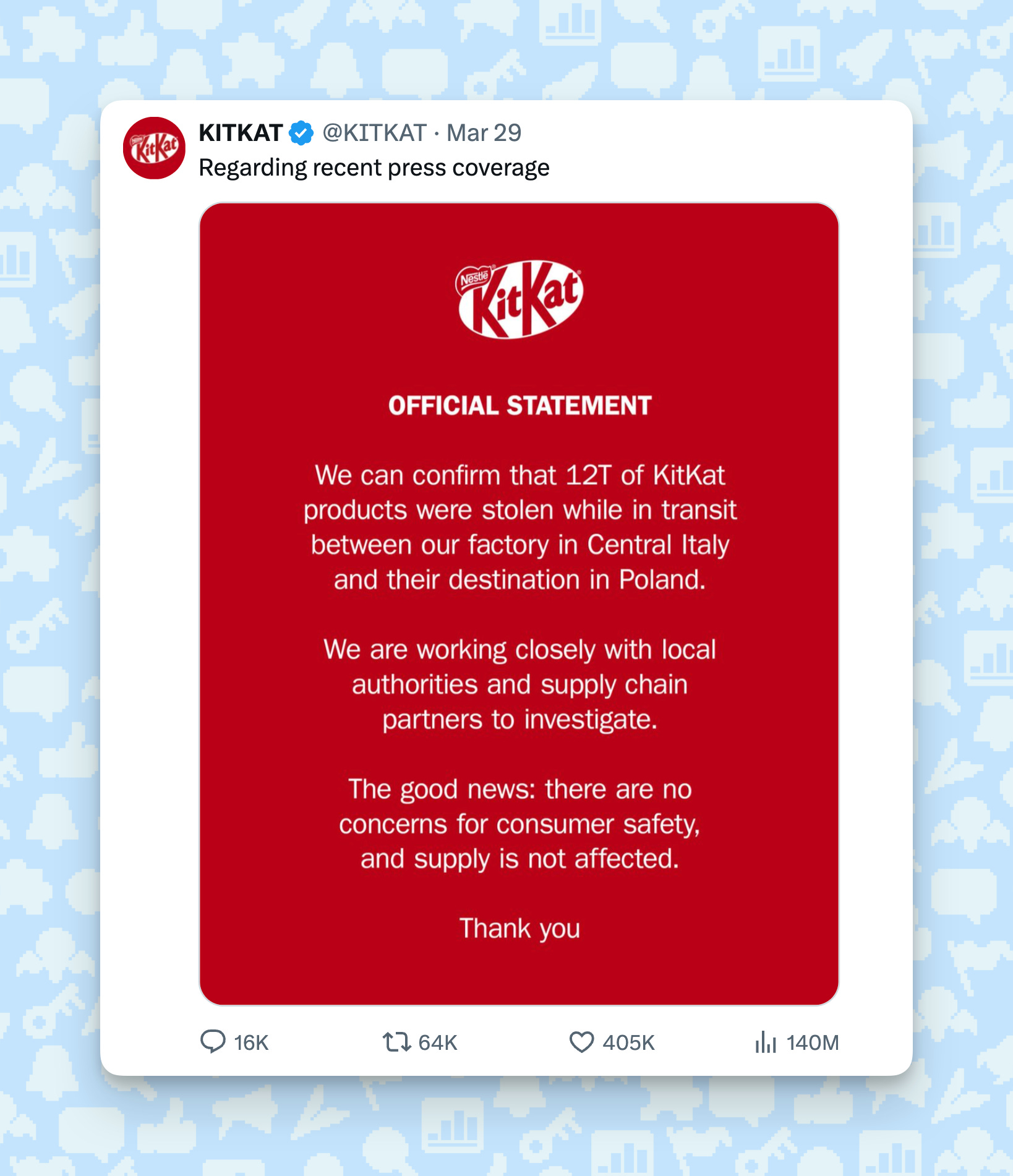
KitKat posted an “Official Statement” confirming the theft.
That post lit the whole internet on fire.
Within 48 hours, every major brand on social media was posting their own “Official Statement” ↓
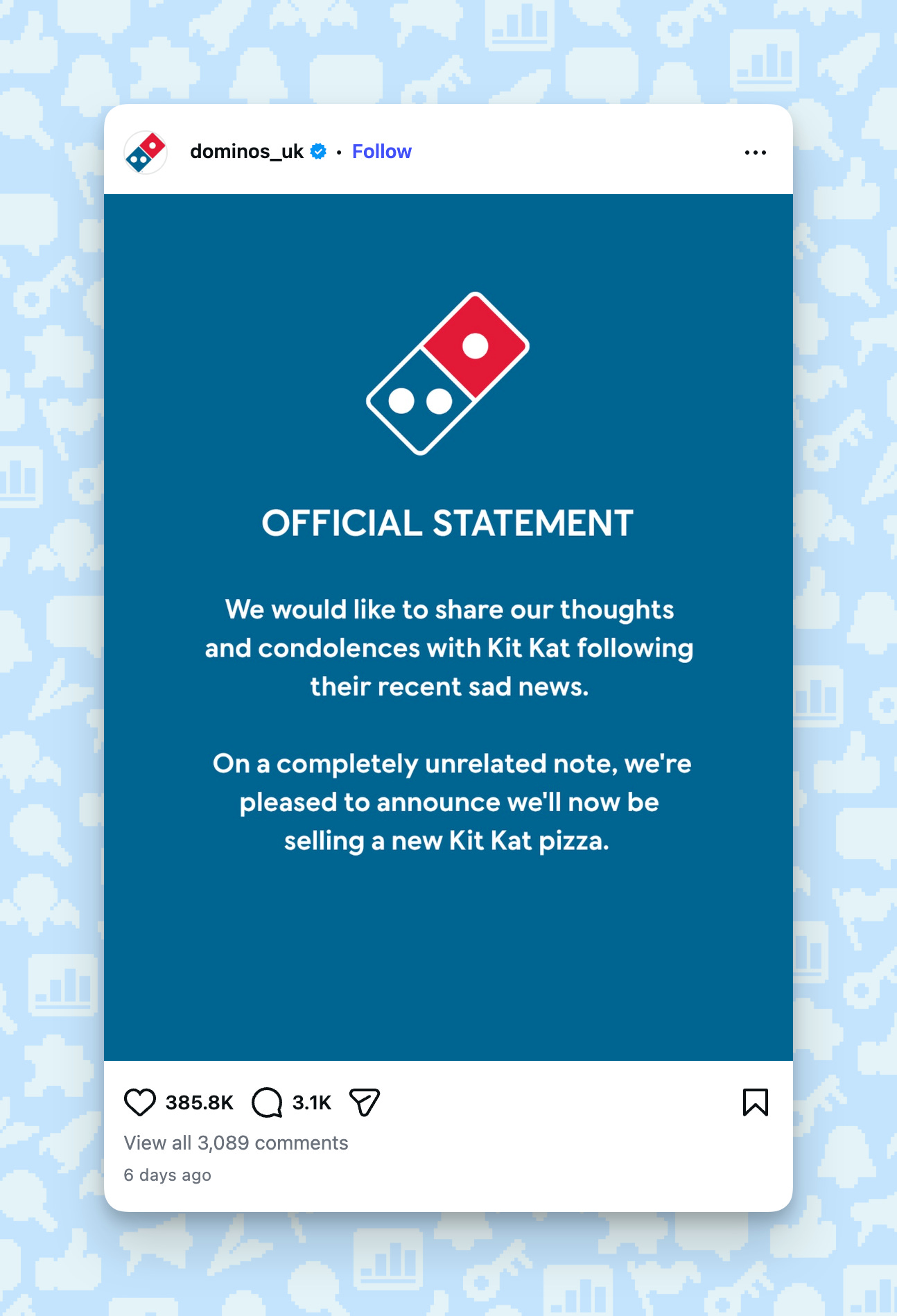
Domino’s sent condolences (and announced their new Kit Kat pizza).
Dr. Squatch pitched chocolate-scented soap (”we have 12 TONS of ingredients btw”). Picsart confirmed their app “cannot hijack trucks”.
DoorDash, RØDE, Ryanair, KFC, McDonald’s... the list is still growing.
KitKat’s social team leaned in even harder and launched a “Stolen KitKat Tracker” where you can check if your bar is from the missing batch.
The truck is still missing.
Every “marketing guru” got this wrong ❌
I’ve seen dozens of posts about this in the last week. All saying the same recycled lessons:
“Don’t be afraid to show vulnerability!”
“Join the conversation!”
“Position yourself!”
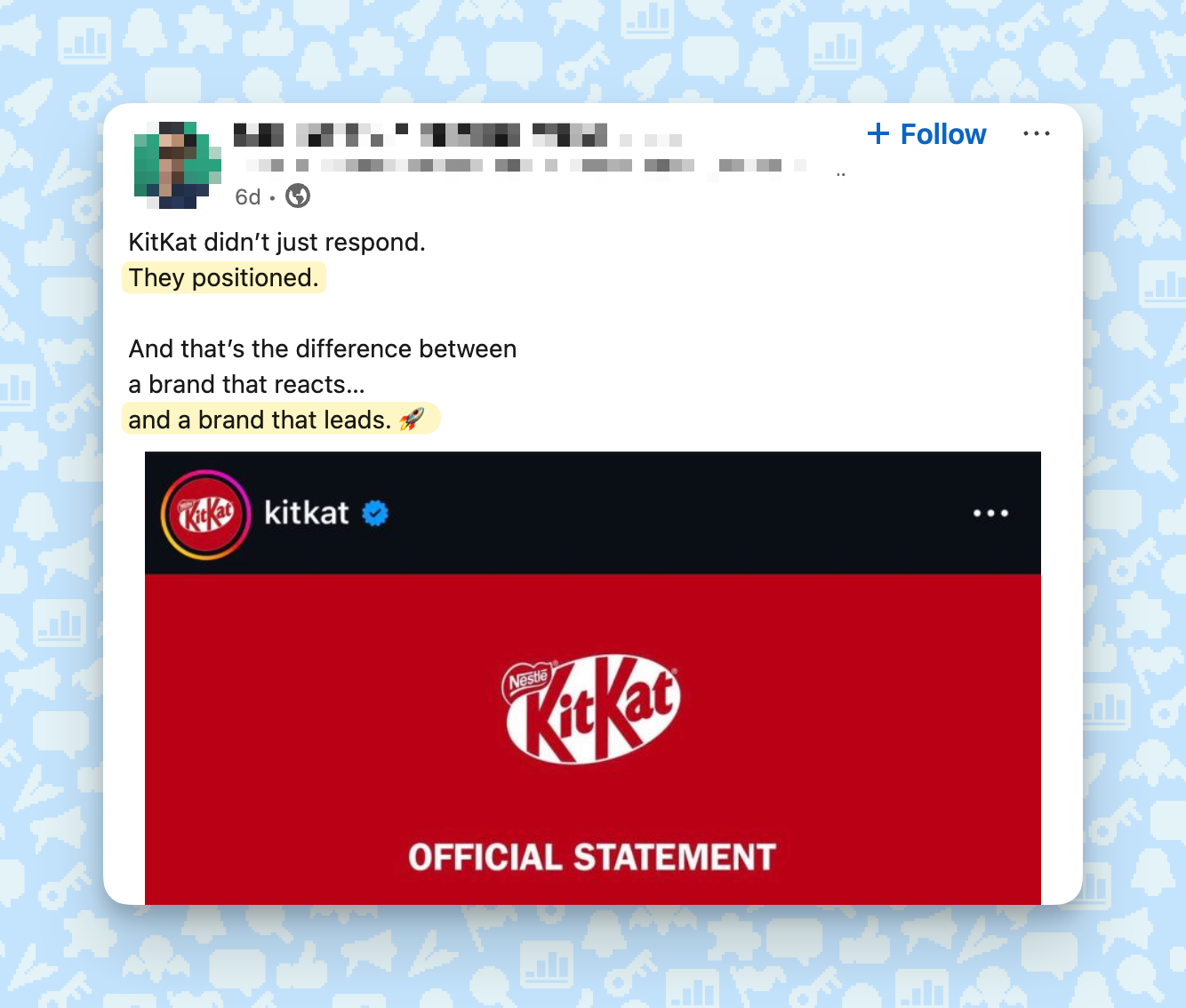
I hate this advice. Try walking into a Monday morning meeting and saying “our strategy this quarter is showing vulnerability”. Your boss will kick you out the door.
I’ve been doing marketing for 12 years. I think the reason Kitkat went viral is way more specific, and way more useful:
KitKat gave everyone a “job” to do 👏
Think about it:
🍫 KitKat played the “victim”. Their tone was serious, which created space for everyone else to be funny.
🪞 Other brands became “suspects”. The “Official Statement” format was so simple that any social media manager could copy it in 10 minutes and plug their own product.
🔮 Regular people became “detectives”. Sharing screenshots, tagging brands, speculating who did it, etc. When the tracker launched, they also had a game to play.
Everyone on the planet had something to do!
That’s why it spread the way it did.
Same pattern every time something truly blows up. When Duolingo “killed” their owl, users had the “job” of figuring out what happened, other brands posted RIP, and Duolingo kept dripping cryptic updates over days.
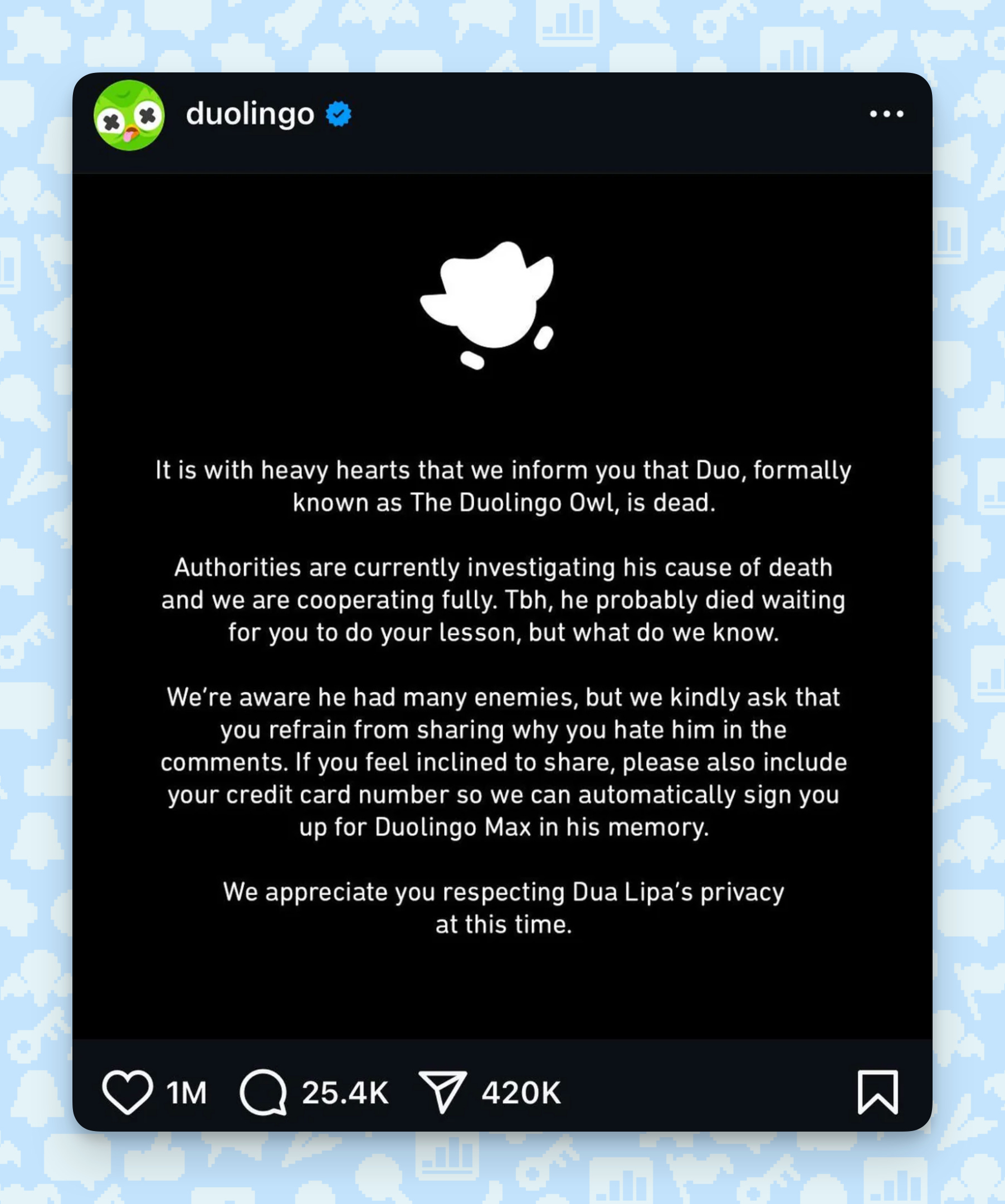
When your audience has a “job” → they do your marketing for you.
How to copy this for your next launch 🧪
Ok enough theory. Here’s the actual playbook for your next big announcement:
🍫 The 4 “jobs” your audience needs before anything spreads (with examples for all types of businesses)
📱 A copy-paste social media sequence for staging a mystery launch from scratch, day by day
🐣 The small brand version how to use this playbook with 400 followers and zero budget
🚨 What happens when you DON’T give people a “job” how a $300M startup nearly killed itself last week by doing the exact opposite of KitKat
You’ll finish this article knowing exactly how to run a viral stunt -- what to post, when to post it, who to partner with, and what to avoid.