


Today’s ✨ free marketing idea ✨ is sponsored by TLDR
Tech people are hard to reach with ads. Most of them use ad blockers and scroll right past LinkedIn ads.
But they read TLDR. It’s 14 daily tech newsletters with over 8 million readers (including me). That’s why companies like Datadog, Google, AWS, Plaid and Shopify advertise there.

Q4 isn’t over. Run a campaign before year end, then walk into Q1 with numbers that show where to scale. TLDR’s team writes the ad for you.
Substack is a cheat code for your brand 🔑
I think Substack is the #1 best source of free traffic in existence right now.
This summer, Google sent me 415 new subscribers. But Substack sent me 20,444 🤯
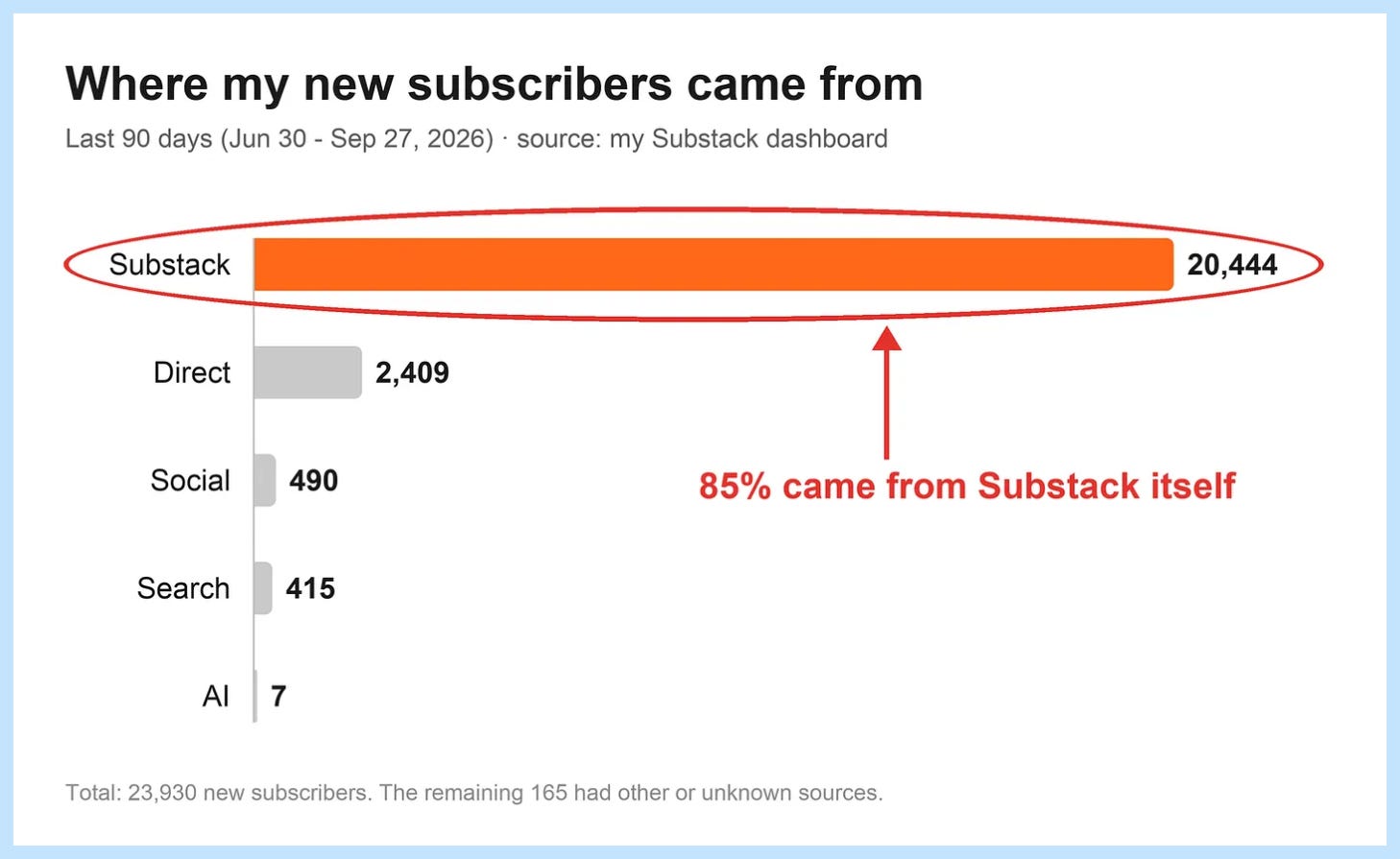
And that’s without posting on Notes (Substack’s version of Twitter) at all.
That’s why, if I ran marketing at a startup today, I’d open a company Substack and ask the team behind the product to write it.
Substack sends you readers 🧲
With a normal blog, you have to find every reader yourself, or wait for chatbots/search to send them. On Substack, other newsletters send them to you.
Here’s how it works: when someone subscribes to a newsletter, Substack shows them a few other newsletters that writer recommends, and they can subscribe to each one with one click. That’s where a lot of my 20k came from.
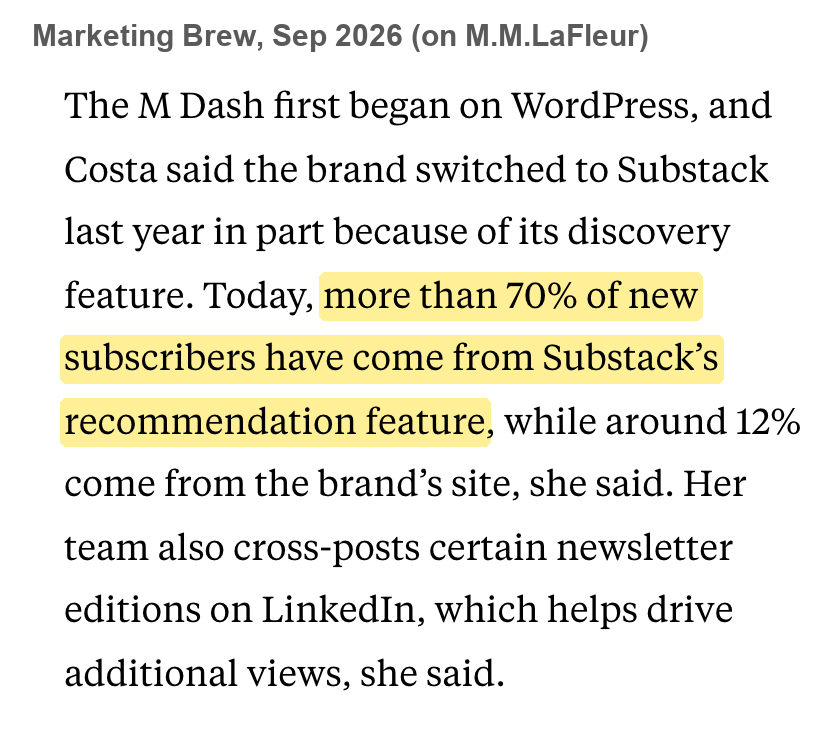
It’s also why M.M.LaFleur moved its newsletter from WordPress to Substack. Now more than 70% of its new subscribers come from those recommendations:
A few company Substacks I love 💌
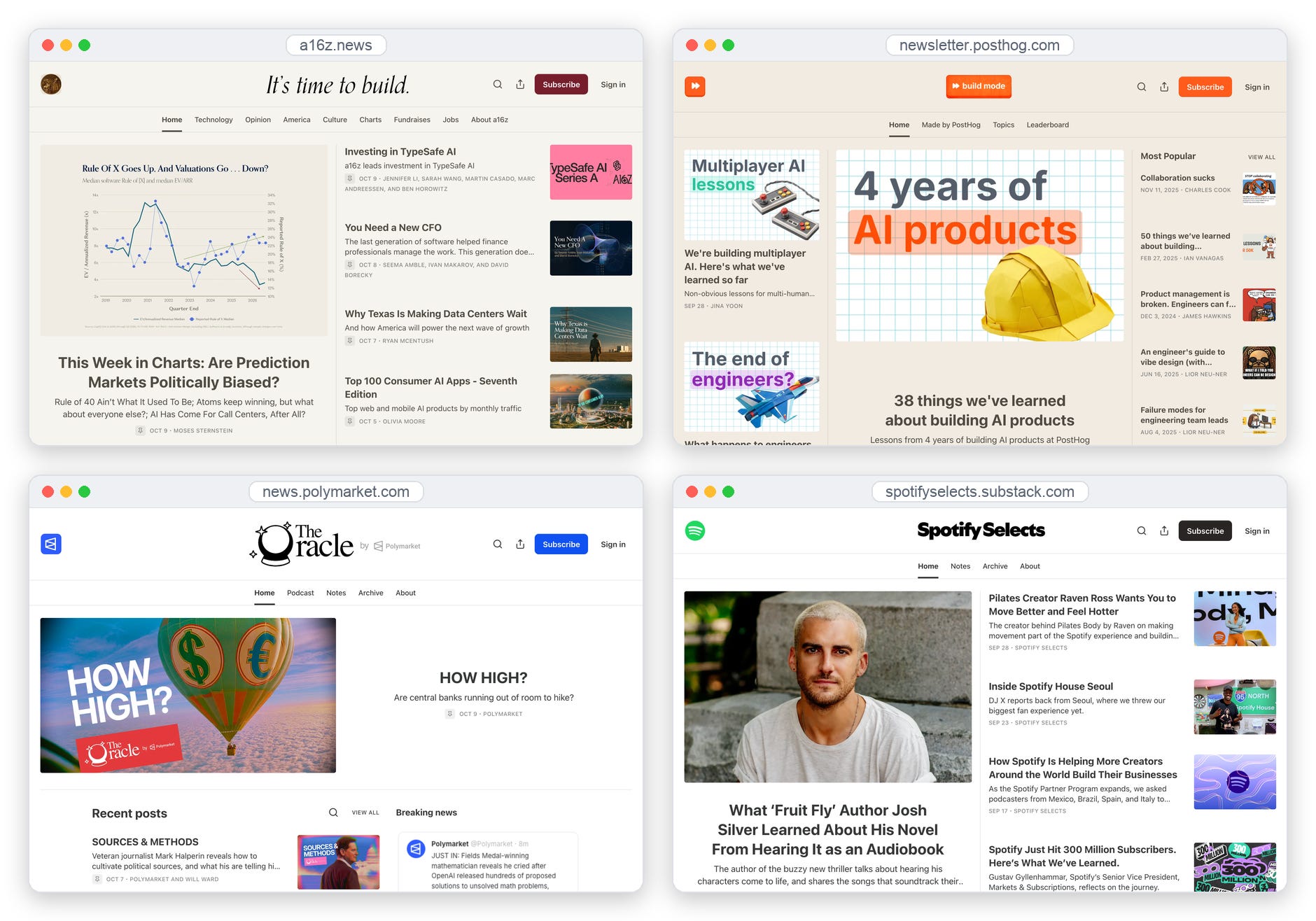
Plenty of companies already run one. a16z has 276,000+ subscribers, and its partners even announce new investments there. PostHog, Polymarket, Spotify and OpenAI’s economists all have one too.
My favorite is the one of the startup Fin.
Every post is a cool behind-the-scenes story, written by the employees.
For example: The CTO, Darragh Curran, published the email where he asked his R&D team to double their output with AI. Nine months later he posted a follow-up showing they actually did it.
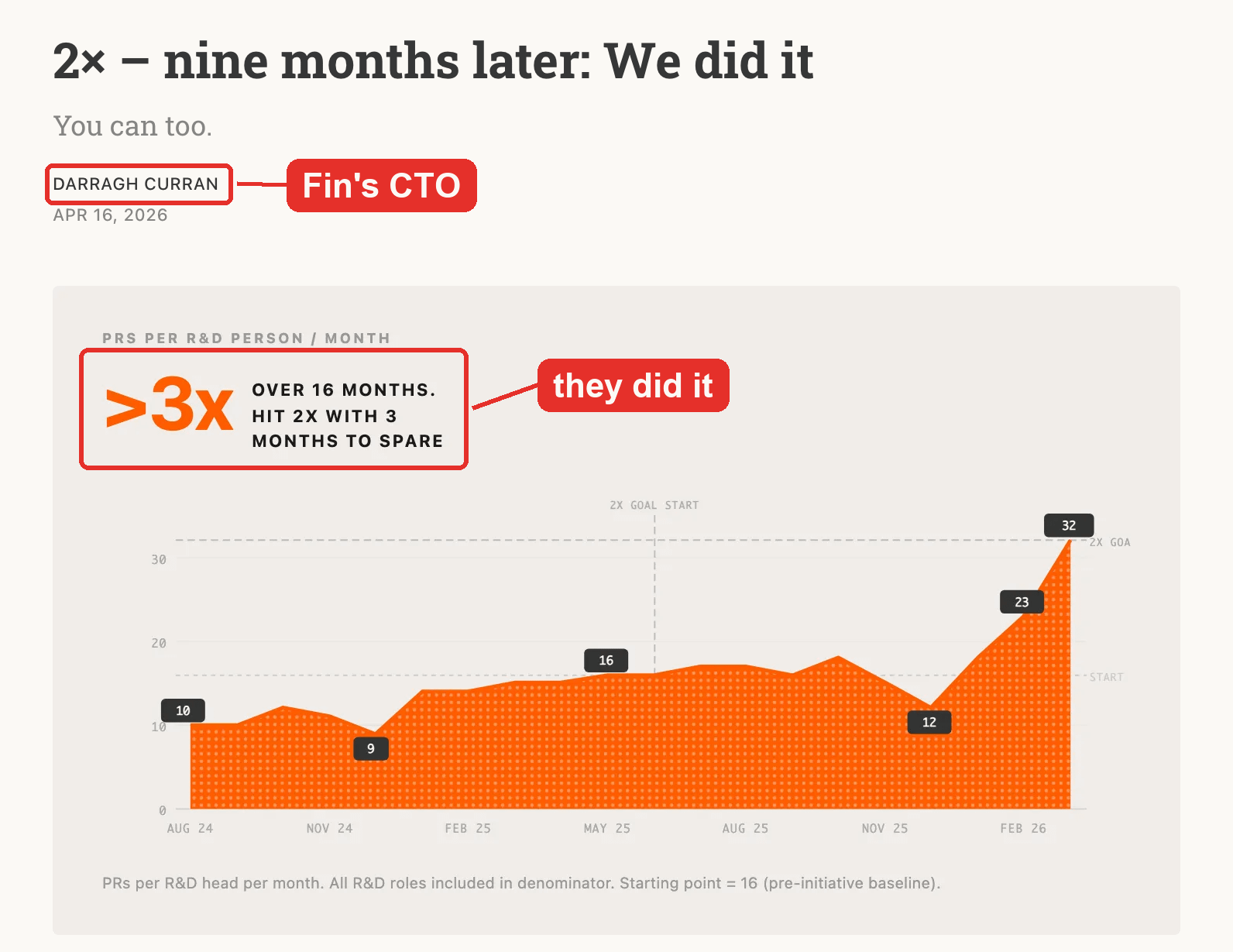
The post started a flood of messages from customers and other companies, all asking how to do the same thing. So Fin set up a big webinar just to answer them. Now the post sits on Fin’s homepage as proof the product “gets better every week”:
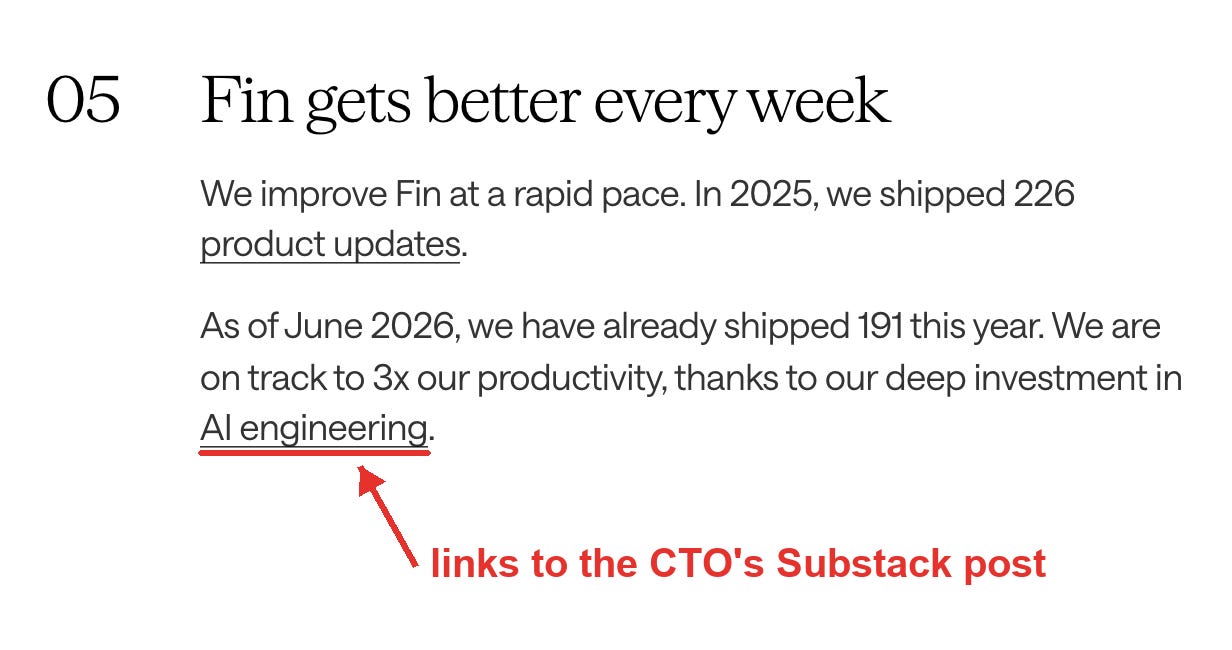
That’s where your Substack content should come from: the people building your product. Your engineers probably won’t want to write, and that’s fine. Interview them and publish it under their name, in their words. HubSpot’s writers did exactly this with me: They wrote 4 articles under my name, each one based on a short call we had.
Other companies let their own people write too:
🪦 The Browser Company’s CEO confessed he “would’ve stopped working on Arc a year earlier” (Arc is their browser). It’s their most-liked post ever.
💳 Ramp’s economist, Ara Kharazian, writes Ramp’s Substack on his own.
💰 An engineer at Ebury, a UK payments company, broke down a $451 Claude Code bill. Most of it went to the AI re-reading its own work.
How to grow it and get free traffic 🧪
First, import your customer email list, so your first post doesn’t go out to zero people.

Then go after recommendations. They’re the main reason to be on Substack. These are the smartest ways I’ve seen companies get them:
🤝 Swap with companies that sell to the same buyer. PostHog’s newsletter recommends exactly 10 engineering newsletters, and all 10 recommend PostHog back. Clay’s recommends Ramp’s, and there are plenty of other collabs like this. To start a swap, recommend them first, then send their newsletter person a LinkedIn DM like this:
💬 “Hey [name]! I run the [company] Substack. A lot of our readers also read yours, so I just added you to our recommendations 🎉 Any chance you’d recommend us back?”
📊 Find your swap partners in your stats. Substack shows you which other newsletters your subscribers read, in your audience stats. The ones at the top already share your readers. They’re your best partners.
💻 Ask your own team. If anyone at your company writes a personal Substack, have them recommend the company one. Ramp’s economist does it from his own Substack: “I write for Ramp’s official economics substack here”.
⭐️ Get it into your sponsorship deals. Ramp sponsors TBPN, the tech talk show. TBPN’s Substack recommends Ramp’s. If you already pay a newsletter, ask for a recommendation too. It keeps sending you readers long after the ad ran.
🌈 Recommend others first. Substack says writers who recommend are 3x more likely to get recommended back. It even emails each writer you recommend. Message them the number once you’ve sent them real subscribers.
My recommendation once sent 2,000+ subscribers to a writer I’d never met, so I sent her this:

She recommended me back that same day. She’s sent me 1,500+ subscribers since 🤯
One more tip: Put a demo link in your Substack’s top menu, like Fin does:

Have a great week ✌️
Tom
P.S. I also wrote a full playbook for building a media brand around your company (podcasts and ghostwriting included).
The 415 from Google vs 20,444 from Substack is a big gap, and I'd want to see open rates next to it. A reader who searched for a topic picked you on purpose. A one-click pick from a recommendation list can be a lighter choice. Do the recommendation subscribers open at about the same rate as the Google ones?