


I receive tons of cold DMs on LinkedIn every day.
So I ran a little experiment:
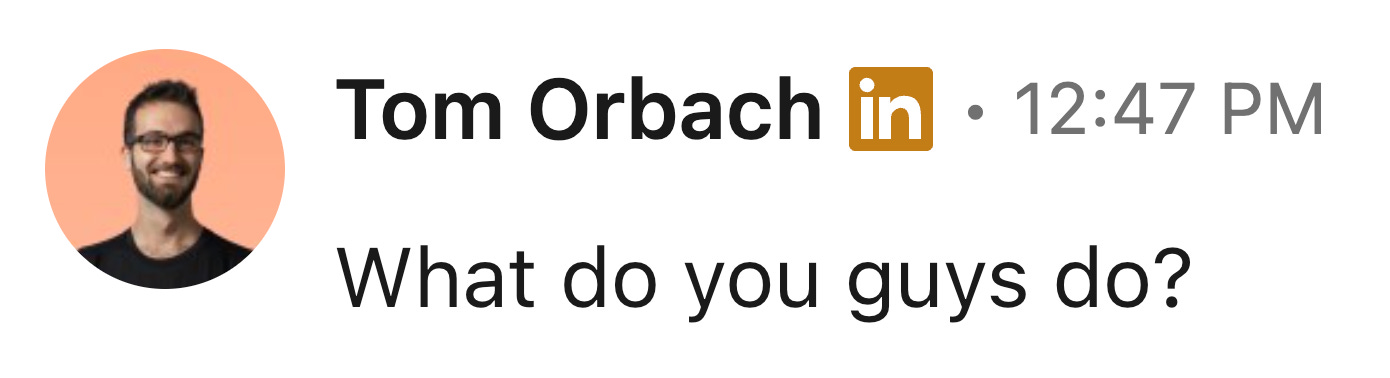
I sent this question to 20+ people who had just pitched me.
Their responses were furiously bad:
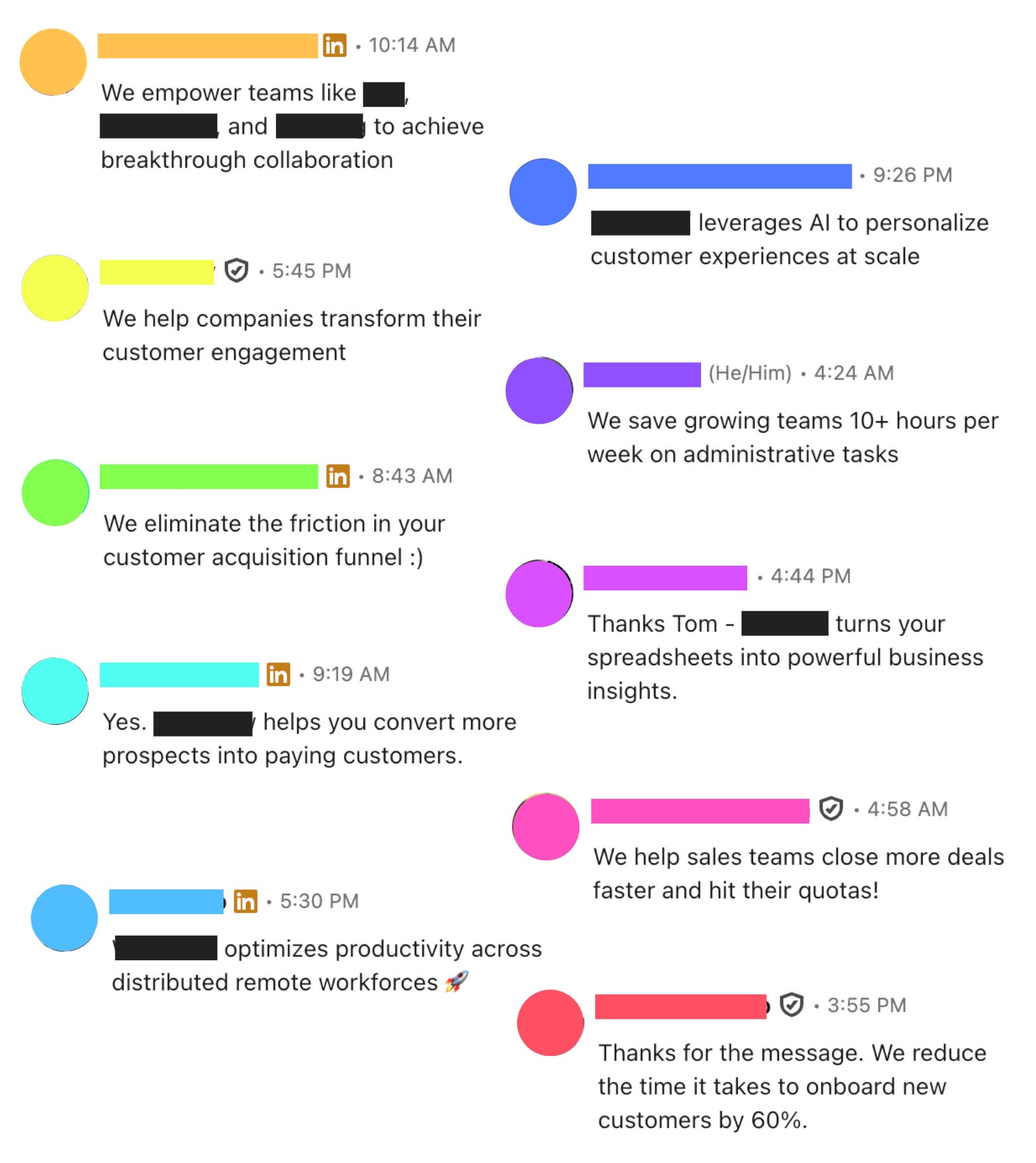
Every response made my brain hurt.
People need to know what you ARE before they care what you SOLVE
When someone can’t figure out your category → they stop listening.
They’re stuck on “What IS this thing?” and never get to “Do I want this thing?”
Let’s get back to my little experiment:
❌ Bad answer: We help salespeople in small businesses save time and close more deals.
✅ Good answer: We’re a CRM that automatically logs your calls and emails.
Here’s the rule: People can’t buy what they can’t understand.
It’s like being told about an “amazing experience for couples” without knowing if it’s a hotel, a restaurant, a concert, etc.
The “gibberish test” that exposes terrible marketers
How do you answer the question: “What do you guys do?”Foundation anchors (these actually work):
🎯 What-it-is: “We’re a CRM”
🎯 What-it-does: “We’re for scheduling meetings”
🎯 What-it-replaces: “We’re a Slack alternative”
Detail anchors (these add context but can’t stand alone):
❌ Who-it’s-for: “We’re for salespeople”
❌ Company-size: “We’re for small businesses”
❌ End-result: “We save you time”
Foundation anchors let people instantly understand your product.
Detail anchors are great for adding context - but only after people know what you are.
I’m going to show you exactly how to fix your pitch
Now that you know foundation anchors work, here’s my favorite way to pick them.
In today’s newsletter:
🍫 The “borrowed category” trick from a 60-year-old product (and how to copy it)
🧩 The 2-word formula I use on every pitch rewrite
⚓ 3 types of anchors and exactly when to use each one (with examples)
🧠 My decision tree for picking the right anchor every time
🔥 The 3 patterns that kill most pitches (must avoid them)
🚨 What to do when the obvious category is wrong